
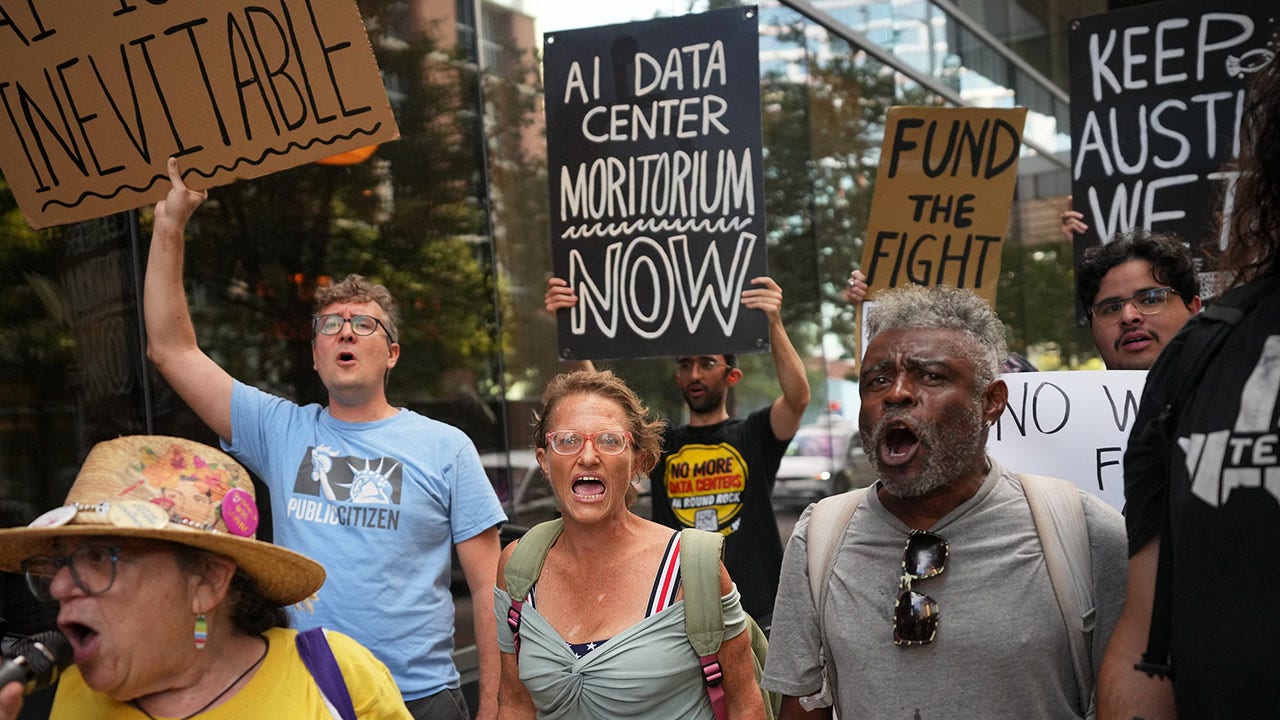
Communities across the United States are facing a growing divide over the construction of large-scale data centers.
While some local governments view these facilities as vital economic engines, others have seen projects stalled by vocal opposition.
In Prince George’s County, Maryland, a proposed $5 billion data center at the site of a defunct mall was recently blocked by activists.
The project was projected to generate $53.5 million in annual tax revenue for a county currently facing a $130 million budget deficit.
Activist Taylor Frazier McCollum opposed the development, stating “Money is, you know, a made-up concept”, as reported by Fox News.
McCollum further noted that she believes the environment holds the utmost value for her community.
Data Center Watch reported that opposition hindered or delayed at least 75 projects worth $130 billion during the first quarter of 2026.
This figure represents a significant increase in industry pushback compared to previous years.
In Virginia, Prince William County potentially lost $400 million in annual tax revenue after the collapse of the Digital Gateway project.
Conversely, Loudoun County has embraced the industry, using data center tax revenue to lower real property tax rates for a decade.
Loudoun County officials reported that data centers accounted for 38% of their general fund revenue in the 2026 fiscal year.
Other regions have seen tangible benefits from these facilities as well.
Henrico County utilized tax revenue to fund an affordable housing trust, while Richland Parish in Louisiana provided teacher bonuses.
Industry experts suggest that developers must prioritize transparency and community collaboration to mitigate local concerns.
Developers are encouraged to address noise levels and infrastructure costs to foster a more cooperative relationship with residents.
Despite these efforts, the tension between economic development and local preservation remains a prominent issue in many American cities.
As municipalities weigh their financial needs, the debate over whether to host these massive tech facilities continues to intensify across the country.