
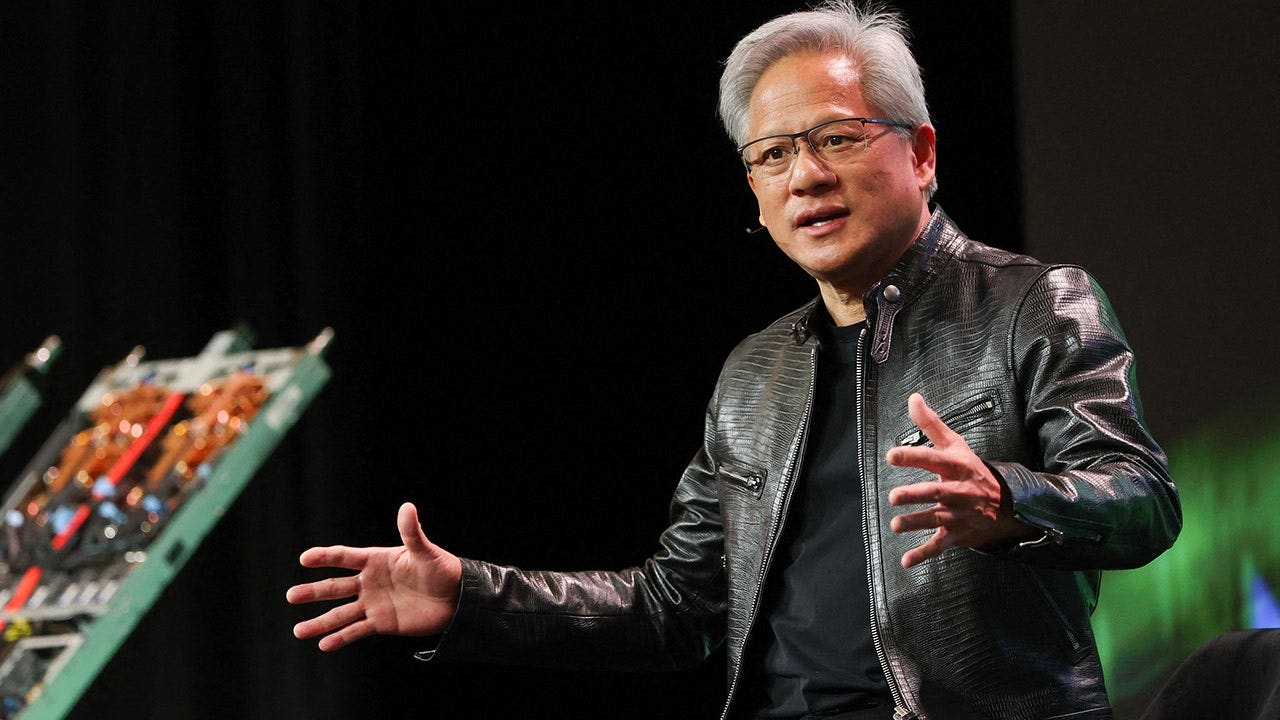
The artificial intelligence sector faces uncertainty regarding future financing as Nvidia navigates leadership changes.
Board chair Harvey Jones announced that the company does not intend to reinstate Jensen Huang as CEO.
Investors are now questioning whether the firm will continue to lead funding rounds for independent companies.
According to “PitchBook data,” rounds involving Nvidia accounted for 27.2% of global venture deal value through mid-November.
Nvidia reported $99 billion in equity investments as of July 26.
The company remains financially strong, reporting $115.8 billion in quarterly revenue, an increase of 103% from the previous year.
Interim CEO Colette Kress stated that the company is currently scrutinizing future investments and commitments.
Kress noted that the company has made no changes to existing financing conditions for specialist cloud providers, “according to Fox News.”
Industry observers warn that delays in lead investment decisions can create significant problems for smaller AI labs.
Specialist cloud providers must often secure funding for chips before they can sell computing time to customers.
If lead investors hesitate, other potential backers may also wait, potentially stalling project development.
This environment creates competitive risks as China increases its influence in the global AI market.
The Lowy Institute reported nearly 1.8 billion downloads of Chinese models on Hugging Face during the third quarter, compared with 500 million for American models.
Some experts advocate for a more diversified approach to American AI infrastructure.
Recommendations include utilizing hardware from companies like AMD, Broadcom, Cerebras and d-Matrix to maintain competitive choices.
Proposals have emerged for the Treasury to convene private investors to identify projects at risk due to financing gaps.
One suggestion involves establishing a $100 billion target for combined public and private commitments.
Congress could potentially authorize a temporary federal credit guarantee to support these efforts under strict oversight.
The goal is to ensure that independent AI companies can continue their work while maintaining national security interests.
Nvidia is expected to be more selective regarding new risks while the company transitions under its current leadership.