
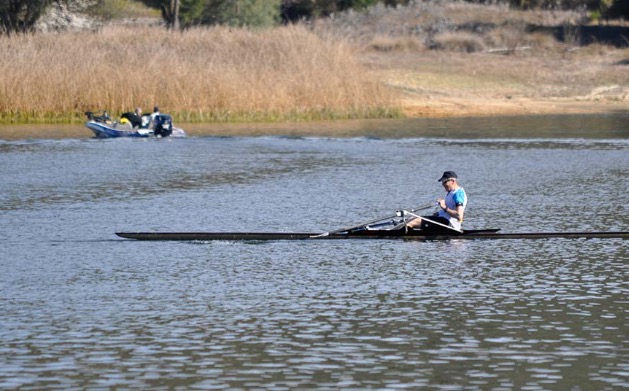
A quiet California reservoir could soon welcome swimmers and recreation enthusiasts for the first time in its history.
Gov. Gavin Newsom signed Senate Bill 1253 on Aug. 31, which officially removes a longstanding state restriction on body-contact recreation at the site.
The newly approved law is scheduled to take effect on Jan. 1, 2027, although local officials caution that actual swimming is unlikely to begin until the summer of 2027 at the earliest.
Before the general public can swim in the water, San Luis Obispo County officials must first address crucial regulations involving health, safety, water quality, infrastructure and operations.
The State Water Resources Control Board’s Division of Drinking Water must also formally approve body contact at the reservoir.
Despite the excitement, the proposal to transform this serene sanctuary into a bustling recreational hotspot has already drawn strong criticism from fishermen and longtime users who fear the noise and crowds.
Anglers are particularly concerned about the lake’s shallow shoreline where bass and other fish spawn.
Expressing deep frustration about the potential loss of the quiet fishing sanctuary, Lakewood resident Mike Byrum declared, “It’s a nightmare,” while hitching his boat to his truck.
Fishermen worry that heavy human activity along the shore will ruin spawning areas and drive fish into deeper water.
To address these local concerns, county officials clarified that high-impact water sports like water skiing, wakeboarding and wake surfing will remain prohibited.
Instead, they envision low-impact activities such as swimming, stand-up paddleboarding, windsurfing and float-tube fishing.
Emphasizing the county’s commitment to safety, Public Works Director John Diodati promised, “Protecting drinking water and public safety will remain our first priorities”.
Acknowledging the challenges, Diodati also noted, “This is an exciting possibility for Santa Margarita Lake, but there is still a lot of work ahead of us”.
The San Luis Obispo County Board of Supervisors will ultimately hold a public meeting and vote on whether to expand recreational access.