
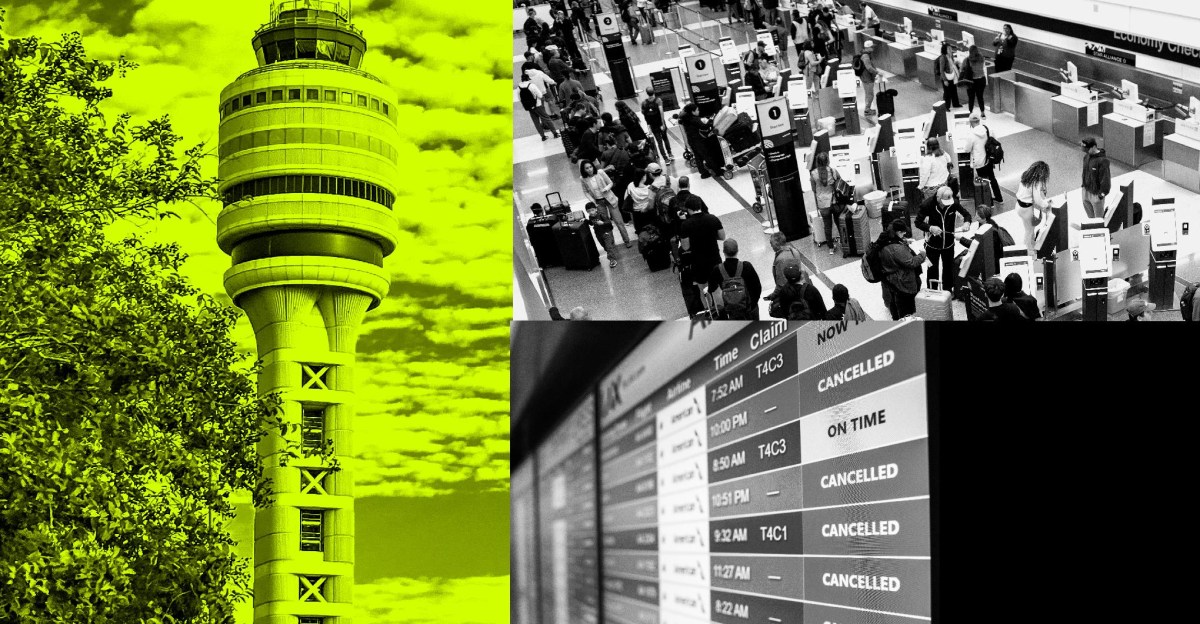
A recent nationwide ground stop that halted air travel across the United States was triggered by a technical error during a routine infrastructure upgrade.
The incident occurred on Friday, November 13, when the Federal Aviation Administration was forced to ground every departing flight in the country for more than four hours.
According to “aviation journalist Darryl Campbell,” the disruption originated at a site in El Dorado, Arkansas.
The location serves as a critical node in a private telecommunications network managed by the defense contractor L3Harris on behalf of the FAA.
Technicians were tasked with replacing aging infrastructure with modern fiber optic technology, a process described by Campbell as moving from a legacy telephone switch to a high-capacity data router.
The failure occurred because a specific setting on the new hardware was left in its default factory configuration.
While the new router was intended to connect to an older, lower-capacity system, it was configured to assume it was operating on a high-throughput fiber optic network.
Consequently, the device began transmitting an overwhelming volume of communication requests to the network.
Campbell noted that the error was essentially a failure to account for legacy compatibility, stating, “It is just that someone forgot to say, ‘Hey, you are connecting to an old system.’”
The resulting traffic surge created a cascade of failures across the aviation network, preventing air traffic controllers from tracking aircraft or communicating with pilots.
Experts emphasized that the event was not the result of a cyberattack but rather a series of mundane management and technical oversights.
The FAA relies on a private network built in the 1990s and early 2000s, which the agency has been upgrading through incremental, piecemeal projects.
The incident highlights the ongoing challenges of maintaining critical national infrastructure while transitioning to modern digital standards without disrupting daily operations.
Following the outage, officials have faced scrutiny regarding the reliability of these legacy systems and the oversight of the contractors responsible for their maintenance.