
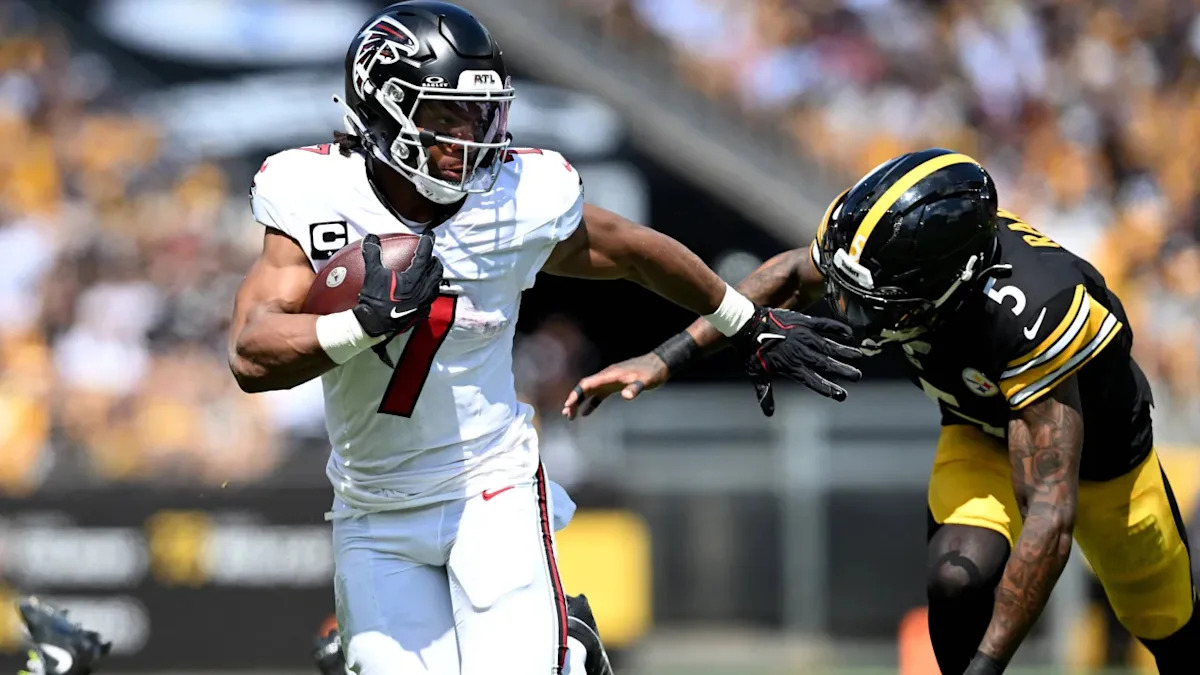
The New York Giants recently engaged in discussions with the Atlanta Falcons regarding a potential blockbuster trade for superstar running back Bijan Robinson. According to reports surfacing within the last day, the NFC East franchise reached out to explore whether the former first-round pick might be available for acquisition.
The organization, currently navigating a challenging offensive season, reportedly made a “bold long-shot trade inquiry” regarding the dynamic playmaker. While the Giants have been actively seeking ways to revitalize their struggling backfield, the attempt to secure a player of Robinson’s caliber was viewed by league observers as a highly ambitious maneuver.
Robinson, who has become a focal point of the Atlanta offense, remains a cornerstone of the Falcons’ long-term strategy. Consequently, the inquiry did not result in a formal deal, as the Falcons showed no indication of parting ways with their young talent. The outreach highlights the Giants’ internal urgency to improve their roster production as the trade deadline approaches.
Internal discussions within the New York front office appear focused on identifying high-impact players who could provide an immediate spark to the team’s stagnant scoring output. However, the nature of this specific conversation serves as a reminder of the disparity between aggressive front-office aspirations and the practical realities of roster management in the modern NFL.
Neither the Giants nor the Falcons have released official statements confirming the specific details of these private communications. The rumors surrounding the inquiry have nonetheless sparked significant discourse among analysts regarding the team’s future personnel decisions. As the season progresses, the Giants are expected to continue evaluating various options to bolster their offensive depth, though high-profile trades of this nature remain statistically unlikely.
For now, Bijan Robinson continues his tenure in Atlanta, while the Giants look toward other avenues to address their offensive deficiencies. The failed inquiry stands as a singular moment of strategic exploration during a period of intense pressure for the New York coaching staff and management alike.