
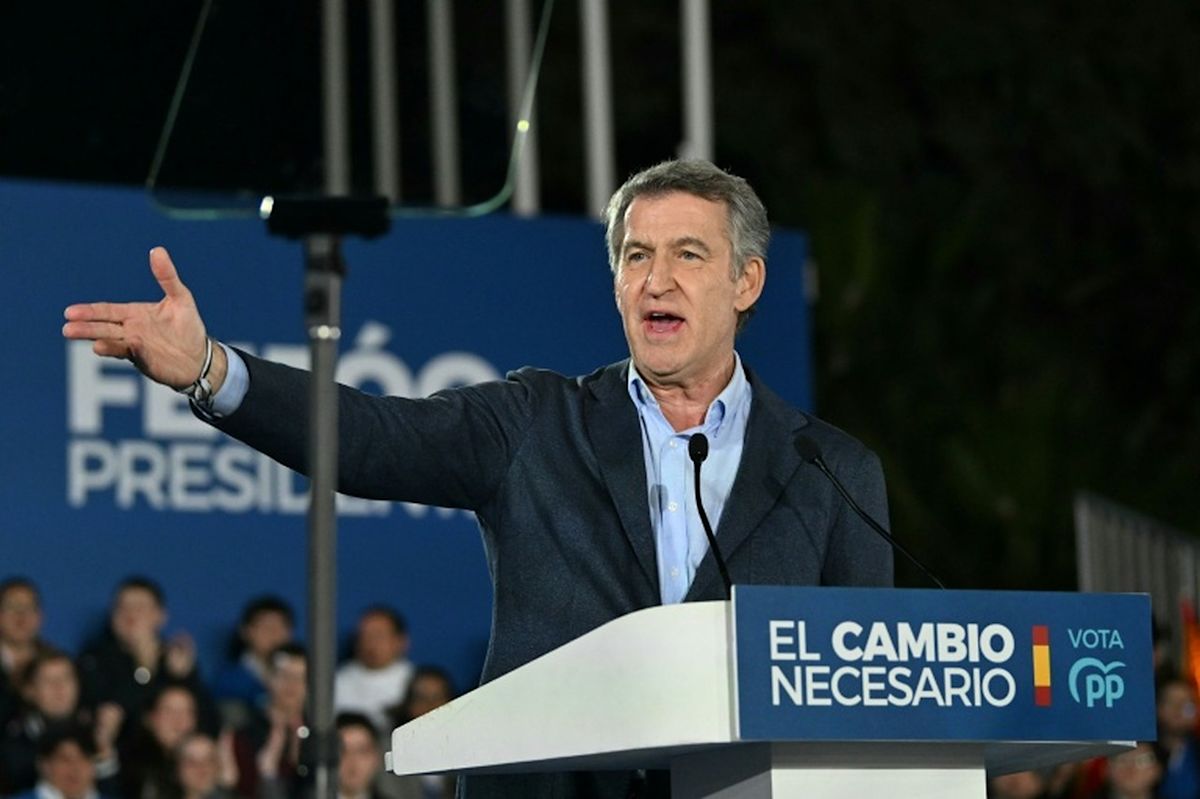
Voting started Sunday in Spain’s general election in which Socialist Prime Minister Pedro Sanchez is battling opinion polls predicting a victory for the country’s conservatives and the far right.
Sanchez was among the first to cast a ballot as polling stations across the country of nearly 50 million people opened at 9:00am for the 11 hours of voting.
Check Your Amazon Prime Eligibility (Without Leaving This Page)
Select your category below to unlock your specific free trial and discounted membership rate:
Prime for Young Adults
Included with Prime for Young Adults:
- Fast, Free Delivery: Unlimited Same-Day, One-Day, and Two-Day Delivery on millions of items.
- Unlimited Streaming: Prime Video with award-winning Originals, movies, and live sports.
- $0 Food Delivery Fees: Free Grubhub+ membership included (save ~$120/year).
Amazon Prime (Standard)
Included with Amazon Prime:
- Fast, Free Delivery: Unlimited Same-Day, One-Day, and Two-Day shipping options.
- Instant Entertainment: Award-winning TV shows, movies, music, and photo storage.
- Full Access to Alexa+: AI assistant for entertainment, deals, and smart home tracking.
Amazon Prime Access
- Full Prime Benefits: Free shipping, Prime Video, and exclusive shopping deals.
- No Long-Term Commitment: Cancel or pause membership anytime.
Polls have placed the Socialists behind the main right-wing Popular Party, though with a hung parliament forecast, the PP may need the support of the far-right, anti-immigration Vox to form a government.
That would bring the far-right into power in Spain for the first time since Spain’s transition to democracy after General Francisco Franco’s fascist-backed dictatorship.
The result is being closely watched as Europe enters a cycle of elections over the next 12 months with a presidential poll in France and legislative elections in Poland and Italy that could reshape the continent’s politics.
Sanchez, one of the few leftist leaders in Europe, has emerged as a darling of the international left in recent years, but his polarising status at home has imperilled his eight-year tenure.
He has however made his name by escaping seemingly hopeless situations.
Sanchez needs a late mobilisation of progressive and undecided voters among the 38.6 million electorate to achieve at least 176 seats for leftist parties in the 350-member parliament.
Marta Ramirez Jimenez told “politics is much more polarised”, denouncing intolerable opinions that are being given a voice, according to AFP.
PP leader Alberto Nunez Feijoo, whose party won most seats at the last election in 2023 but failed to form a government, has dismissed what he calls Sanchez’s campaign of fear.
Feijoo, who ran the northwestern region of Galicia for 13 years, has tried to project an image of experience and competence.
The PP has attacked Sanchez for years over high-profile corruption scandals, concessions to Catalan separatists and failing to pass a budget.
Two high-speed train collisions this year that together killed 115 people and July’s migrant rush into Spain’s north African city of Ceuta from Morocco have provided further ammunition to the PP and Vox.
A recent surge of migrant boats arriving in the Canary Islands has put Sanchez’s outspoken defence of a more open immigration policy under scrutiny.
Spain’s ageing population has grown mainly due to immigration, which the government says is driving economic growth.
Sanchez has tried to leverage anger over a chronic housing crisis, passing measures for tenants earlier this month.
The right, whose rejection of urgent housing decrees in October prompted Sanchez to call a vote originally scheduled for 2027, has blamed his successive governments for soaring housing costs.
Retiree Domingo Perez said there needs to be a change, because of everything that’s happened, so much corruption, the Spaniards who can’t make ends meet.
Vox has focused its campaign on immigration, which it connects with the housing crisis and other issues to tap into popular frustration, particularly among the young.