
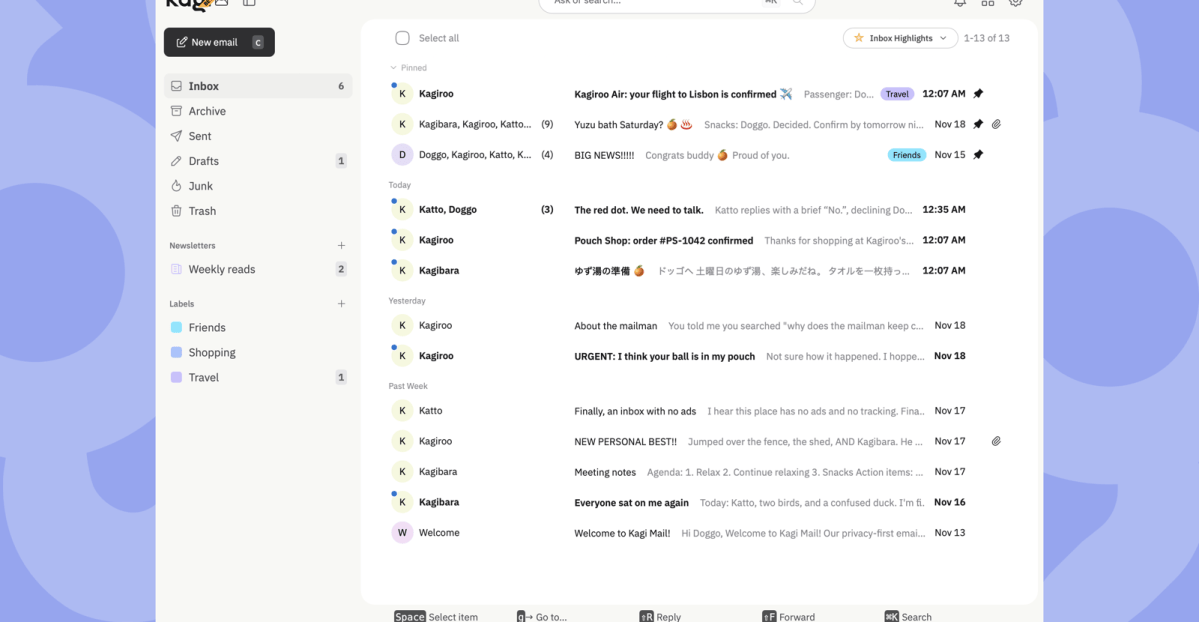
Kagi, a company known for providing a paid alternative to Google Search and the Orion browser, has expanded its product offerings.
The company announced the launch of a public beta for Kagi Mail, a new email service designed to compete with Gmail.
The service emphasizes a privacy-first approach for its users.
According to the company, the platform features “no surveillance, no ads, open standards, and no lock-in,” as reported by The Verge.
Users who sign up for the service receive an @kagimail.com email address.
The platform supports unlimited aliases and custom domains for its subscribers.
Additionally, the service includes a built-in calendar and provides 50GB of storage capacity.
The company has outlined a long-term development schedule for the new platform.
Management expects to add contacts and an address book feature during the first quarter of 2027.
However, users looking for dedicated mobile applications will have to wait longer.
Native mobile apps are not projected to arrive until the third quarter of 2027.
The company addressed the necessity of its new product in a public statement.
Reflecting on the competitive landscape of digital communications, the company asked, “Does the world need another email service?” according to The Verge.
This expansion marks another attempt by Kagi to challenge Google by developing independent alternatives to established software ecosystems.
The company previously established itself with its search engine and the Orion browser, which serves as a rival to the Chrome browser.
By entering the email market, Kagi continues its strategy of building a suite of privacy-focused productivity tools.
The service is currently available to the public in a testing phase.
Potential users can monitor the company website for future updates regarding the roadmap and the release of mobile software.
The transition into email services highlights an ongoing trend among smaller technology firms looking to provide alternatives to major tech conglomerates.
Kagi maintains that its focus remains on user privacy and the removal of advertising from the user experience.