
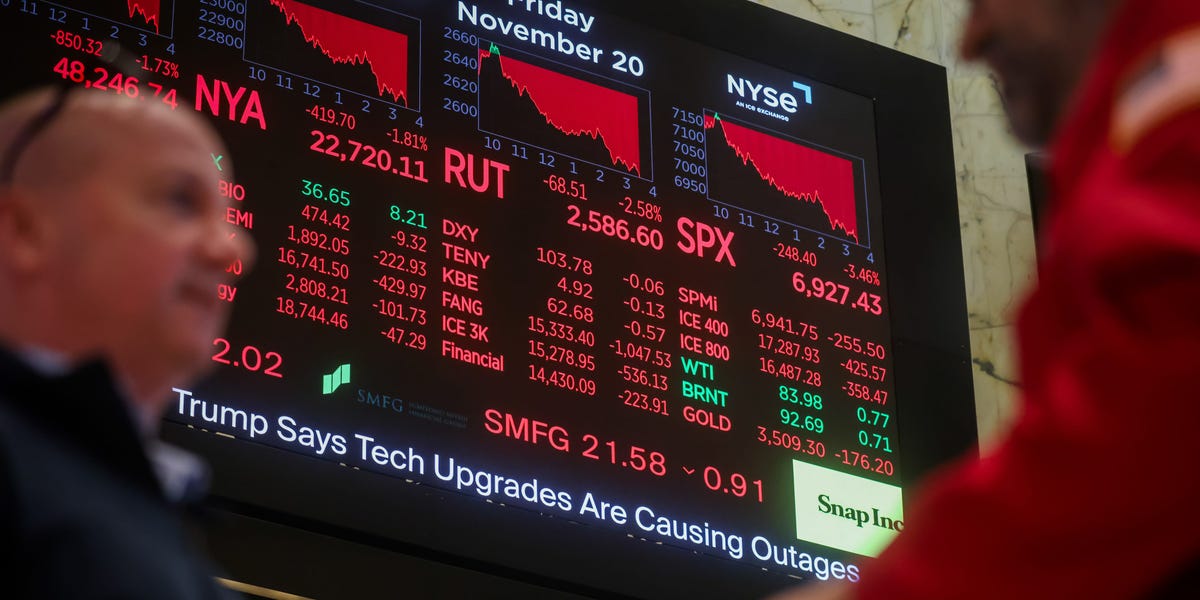
Major U.S. stock indexes concluded a difficult week marked by significant declines that pushed them into correction territory.
The Nasdaq Composite, the Dow Jones Industrial Average, and the S&P 500 all recorded their worst weekly performances in years, according to “Business Insider.”
The Nasdaq dropped 10% over the five-day period, while the Dow shed 8%, representing the most severe weekly downturn for both since March 2020.
The S&P 500 fell 9%, marking its largest weekly loss since April 2025.
All three indexes closed the week down more than 10% from recent highs, officially entering correction territory.
The Nasdaq has erased its year-to-date gains and is currently down 2.7% for 2026, while the S&P 500 and Dow remain slightly positive for the year.
The technology sector faced particular pressure as chipmakers struggled.
The Philadelphia Semiconductor Index is down 43% from its record highs, with significant losses reported for companies including Micron, Marvell Technology, AMD, and TSMC.
Nvidia experienced its seventh consecutive weekly decline, the longest streak since 2008, following a period of volatility related to the resignation of former CEO Jensen Huang.
The company has lost $1 trillion in market value since the leadership change, according to “Business Insider.”
The Roundhill Neocloud ETF also plummeted 25% during the week.
Market analysts cited several unresolved negative forces, including a tenuous outlook for artificial intelligence sentiment and a widespread expectation that the Federal Reserve will raise interest rates during its Dec. 9 meeting.
The calendar for potential market catalysts remains sparse, with the next major economic report, the November jobs data, not expected until after the Thanksgiving holiday.
While the price of Brent crude oil has fallen more than 20% in November, investors have largely focused on the broader sell-off in equities.
Stock futures indicated a potential rebound for the start of the following week, though market participants remain cautious regarding the lack of clear catalysts to sustain a recovery in the near term.