
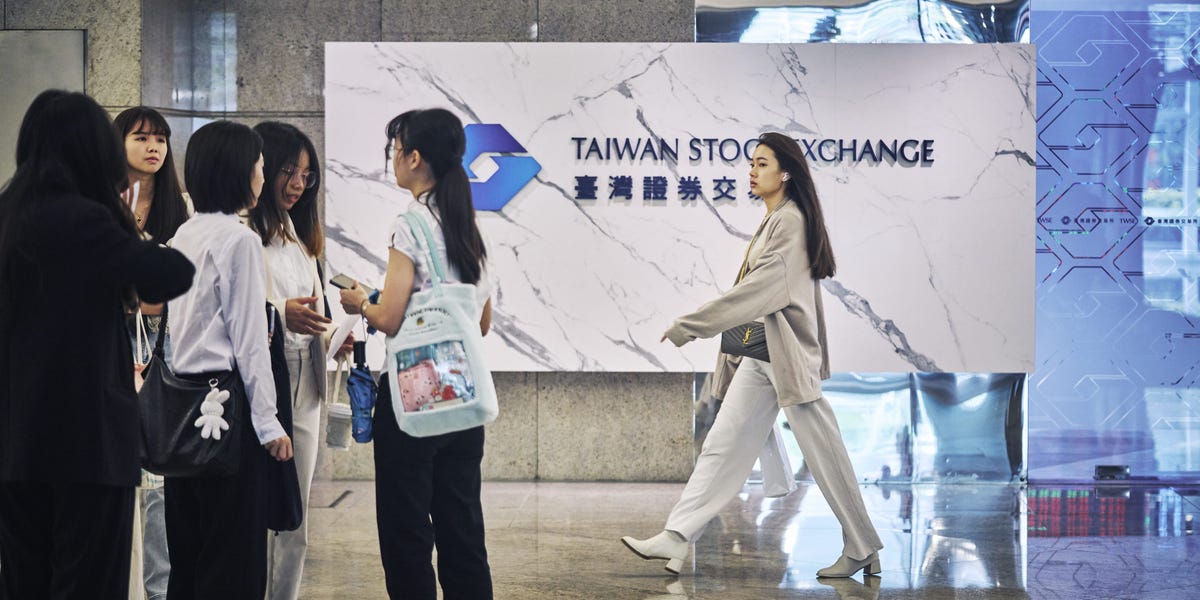
Taiwanese financial regulators announced new restrictions on short selling in an effort to stabilize the country’s stock market following a period of intense volatility.
The Financial Supervisory Commission stated the measures were enacted “in response to the recent significant fluctuations in the Taiwan stock market,” according to the commission.
Effective Monday, the policy implements a complete ban on short selling below the closing price.
The commission clarified that these restrictions do not apply to short selling or borrowing by securities firms and futures companies for hedging purposes.
The intervention comes as Taiwan’s main trading index, which is heavily weighted toward semiconductor companies, experienced a 17.5% decline over the previous five trading days.
Global markets have also faced downward pressure, with the S&P 500 and the Dow entering correction territory after falling at least 10% from recent highs.
Some market analysts suggest the recent turmoil indicates a potential turning point for the artificial intelligence trade.
Investor Michael Burry, known for his role in the 2008 financial crisis, commented on the situation via social media.
He referenced his past warnings regarding chip manufacturers and cloud infrastructure, noting “Coreweave, Nebius, Nvidia, semis, I tried to warn you all,” as reported by Business Insider.
Burry added that while he did not explicitly recommend shorting, he provided information for investors to sell their positions.
Market observers noted that the new limits on short selling could inadvertently complicate efforts for investors attempting to hedge their portfolios.
To generate liquidity, these investors might opt to sell their long positions instead.
The situation draws comparisons to 2008, when the U.S. Securities and Exchange Commission temporarily banned short selling for financial stocks during the housing market collapse.
That previous intervention largely failed to stop the decline in asset prices.
At the time, then-SEC Chairman Christopher Cox suggested that such emergency measures “would not be necessary in a well-functioning market,” according to Business Insider.