
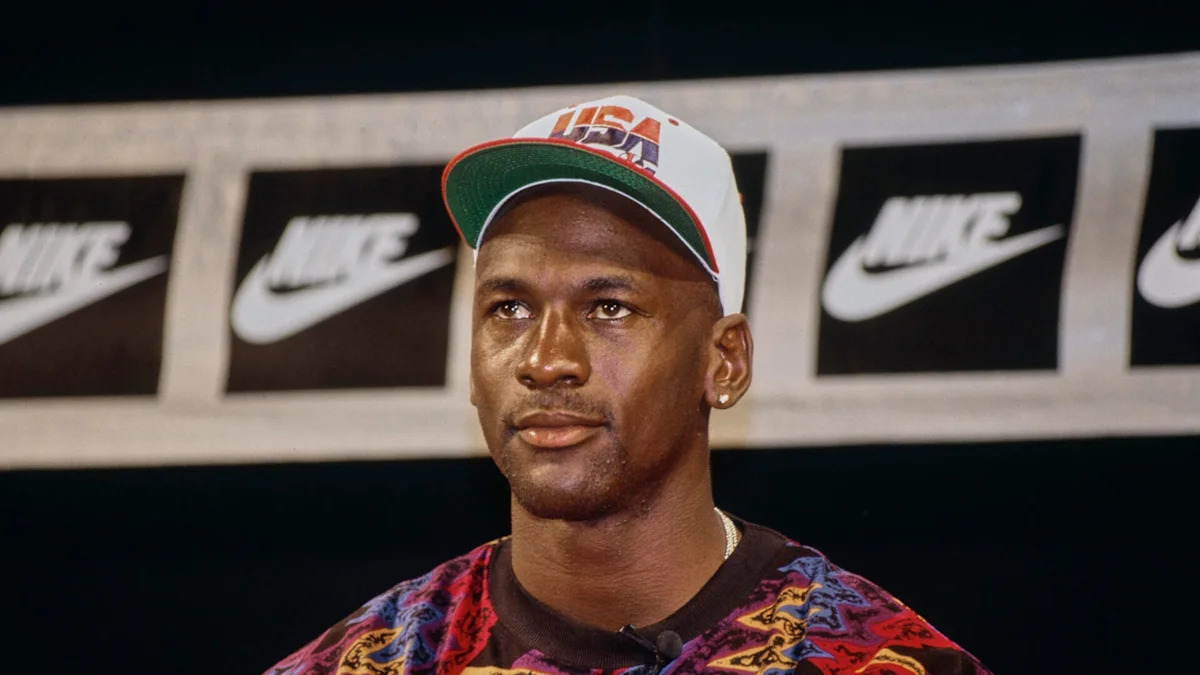
When Michael Jordan entered the NBA in 1984, his partnership with Nike was far from the guaranteed success it is today.
According to “details revealed by agent David Falk”, the company was concerned about the financial risks of banking on an unproven rookie.
Falk noted that Nike executives requested specific performance benchmarks to protect their investment.
During a podcast appearance, Falk described his conversation with then-marketing head Rob Strasser regarding these contract stipulations.
Falk recalled telling the executive that “that makes no sense” because Nike was not an NBA team concerned with individual statistics.
The company ultimately insisted on a $3 million sales threshold over the first three years as a condition to continue production.
Falk stated that the firm wanted the right to cancel the shoe line if Jordan failed to earn Rookie of the Year honors or achieve specific scoring milestones.
However, the athlete quickly exceeded all corporate expectations.
Falk reported that Jordan generated $126 million in sales during his first year alone, effectively securing his future with the brand.
While industry opinions on the greatest player of all time remain diverse, such as when “JuJu Watkins named LeBron James” as her pick, Jordan’s commercial impact remains undisputed.
The Jordan Brand has since evolved into a massive financial pillar for Nike, currently generating over $7 billion in annual revenue.
This massive growth underscores how the initial skepticism surrounding the rookie’s marketability was proven wrong by his unprecedented success.
Even as some athletes like “Yaxel Lendeborg noted” shifts in their personal GOAT rankings, the historical significance of the original Nike deal remains a pivotal moment in sports marketing history.
The fail-safe clause, once a source of tension, now serves as a reminder of the risks taken before the rise of a global icon.