
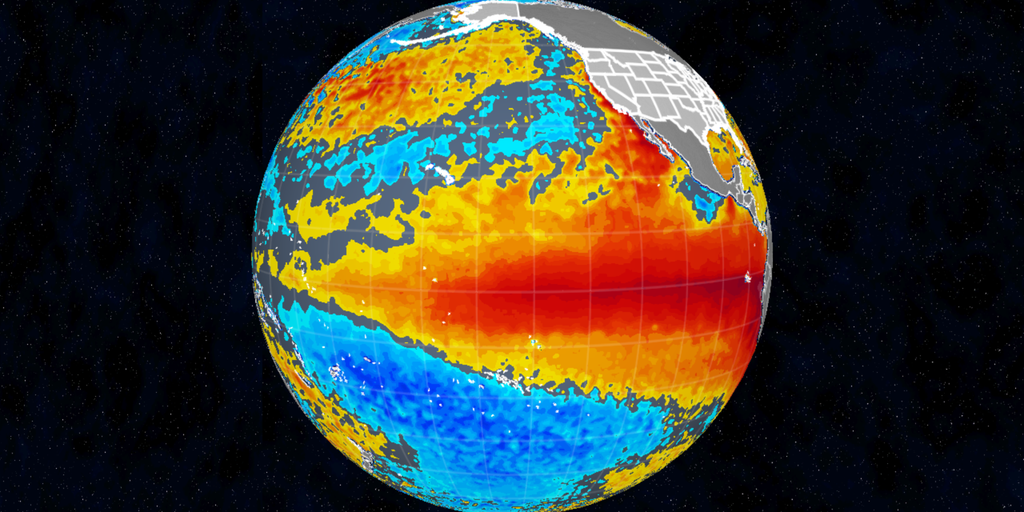
Meteorologists have officially confirmed the development of a super El Niño climate pattern, an event characterized by unusually warm ocean temperatures in the equatorial Pacific. This phenomenon is now expected to exert a profound influence on weather conditions across the United States throughout the coming winter months.
The National Oceanic and Atmospheric Administration has been closely monitoring the situation as forecasters “predict big changes to U.S. winter weather” due to the strength of this current cycle. Experts suggest that the atmospheric shifts associated with this event will likely redirect the jet stream, creating distinct regional disparities in temperature and precipitation patterns.
For the northern tier of the United States, the forecast indicates a trend toward warmer and drier conditions than typically experienced during the winter season. Conversely, southern regions are bracing for a wetter and cooler outlook, which could increase the risk of flooding and severe storms in areas that are not accustomed to such intense precipitation during these months.
The classification of a super El Niño is reserved for events where sea surface temperatures in the central and eastern Pacific reach significantly high anomalies. This specific occurrence is among the strongest observed in recent decades, leading climate scientists to adjust their seasonal outlooks accordingly. Officials emphasize that while these predictions provide a general framework for what to expect, local weather variability remains a critical factor for residents to monitor.
Emergency management agencies are already advising communities to prepare for the potential impacts of these shifting climate dynamics. The combination of increased moisture in the south and altered storm tracks could lead to complex challenges for infrastructure and public safety. As the winter season approaches, the scientific community continues to analyze real-time data to refine these long-range projections.
The global climate community remains vigilant in tracking the evolution of this system. While the current data points toward specific regional outcomes, experts note that the interconnected nature of the atmosphere means that ripple effects could be felt across various sectors, including agriculture and energy consumption. Citizens are encouraged to stay informed through official weather channels as the situation develops over the next few months.