
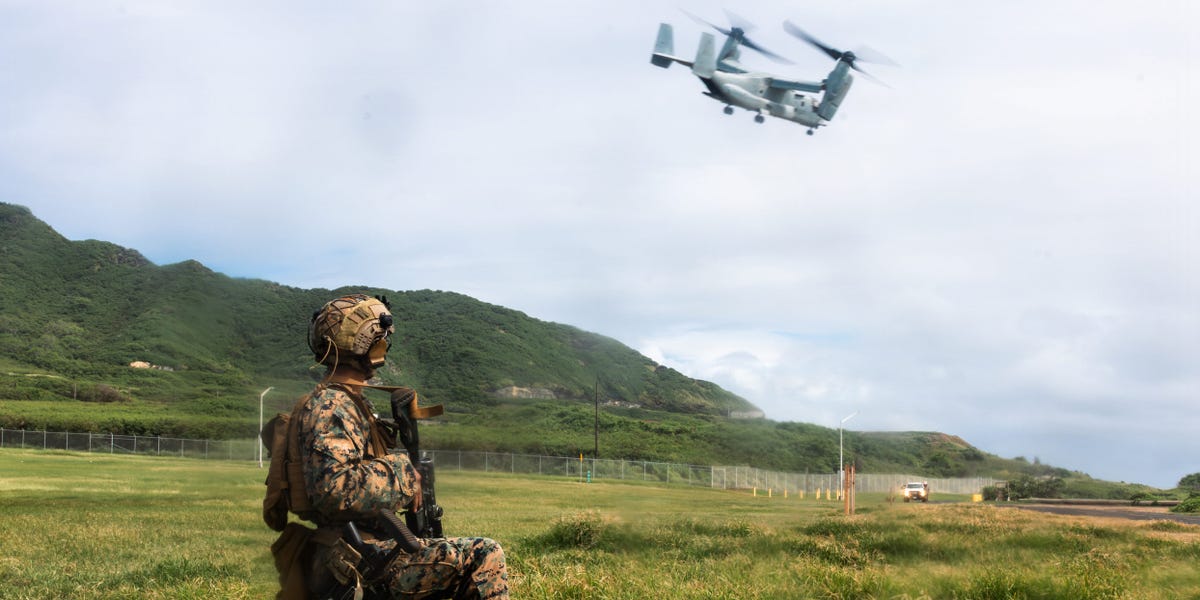
The United States Marine Corps is actively evolving its battlefield posture in response to the growing strategic challenges posed by potential adversaries in the Pacific theater. Recent training exercises indicate that the service is moving away from large, static command centers which are increasingly vulnerable to sophisticated long-range precision strikes.
Instead, military leaders are emphasizing the necessity to “break up and move their command posts to survive a Pacific war” as part of a broader doctrine focused on distributed lethality. This tactical shift requires smaller, highly mobile units that can coordinate complex operations while remaining elusive enough to avoid detection by enemy surveillance systems.
The transition reflects a fundamental change in how the Corps views modern warfare, where the ability to maintain communication while constantly relocating is essential for operational success. By breaking down traditional command structures into modular components, Marines can maintain persistent situational awareness across vast maritime distances. This approach minimizes the risk of a single catastrophic strike disabling an entire command element, ensuring that the force remains resilient even under intense pressure.
Military analysts note that this strategy is critical for the implementation of Force Design 2030, a comprehensive modernization program aimed at restructuring the service for peer-level competition. The focus on mobility and decentralization allows for greater flexibility when operating within contested environments, such as those found across the South China Sea or the island chains of the Indo-Pacific region.
As the Marine Corps continues to refine these tactics, the emphasis remains on integrating advanced communication technology with traditional field craft. This ensures that commanders can effectively manage dispersed forces without relying on the fixed infrastructure that characterized previous conflicts. Through these rigorous training cycles, the service aims to maintain a decisive edge by proving that its command elements can operate effectively in the most challenging and high-threat environments imaginable today.