
Tensions between Oregon and Utah have escalated following recent comments from Utes head coach Kyle Whittingham regarding the financial landscape of collegiate recruiting. During a recent media availability, Whittingham suggested that the Ducks have been able to “outbid everybody” when pursuing top-tier talent in the transfer portal and high school recruiting cycles.
The remarks specifically targeted Oregon’s robust Name, Image, and Likeness infrastructure, which has become a focal point of discussion within the Big Ten conference. Whittingham’s implication was that Oregon’s financial resources have provided an unfair competitive advantage, a sentiment that has circulated among various coaching circles as programs adapt to the new era of college athletics.
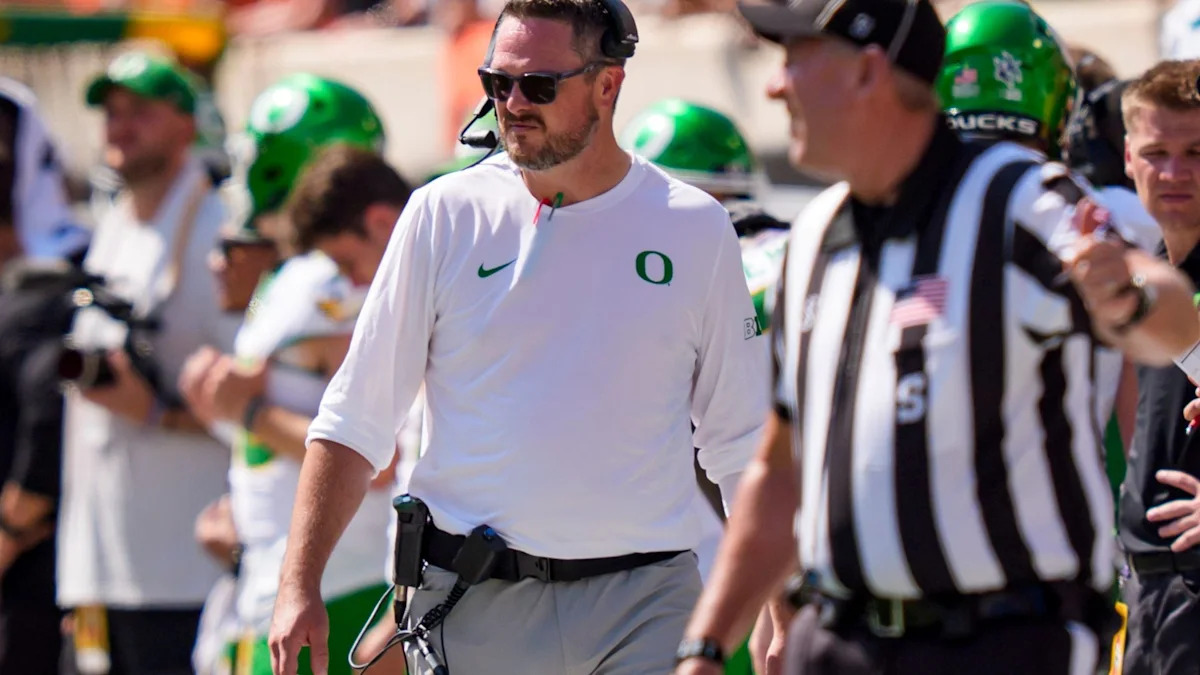
Dan Lanning, Oregon’s head coach, did not remain silent on the matter. Addressing the media in the last 24 hours, Lanning offered a sharp rebuttal that emphasized the importance of culture over pure financial incentive. He suggested that players choose to join his program for reasons that extend far beyond monetary compensation, pointing toward the development and professional trajectory of his athletes.
Lanning’s response has ignited significant debate on social media platforms, where fans have closely analyzed the exchange. Many observers have characterized the interaction as a verbal victory for Lanning, noting that he successfully pivoted the conversation to highlight the success of his current roster. The public discourse reflects a broader frustration among coaches regarding the lack of uniformity in NIL regulations across the country.
While Whittingham’s comments were framed as an observation on the current state of the sport, Lanning’s quick retort indicates that the Oregon staff is prepared to defend the integrity of their recruiting process. As both programs continue to navigate the complexities of modern conference realignment and recruitment, this exchange serves as a reminder of the heightened stakes involved. Neither school has issued further statements regarding the matter, but the narrative surrounding Oregon’s financial approach remains a contentious topic for rival programs moving forward.