
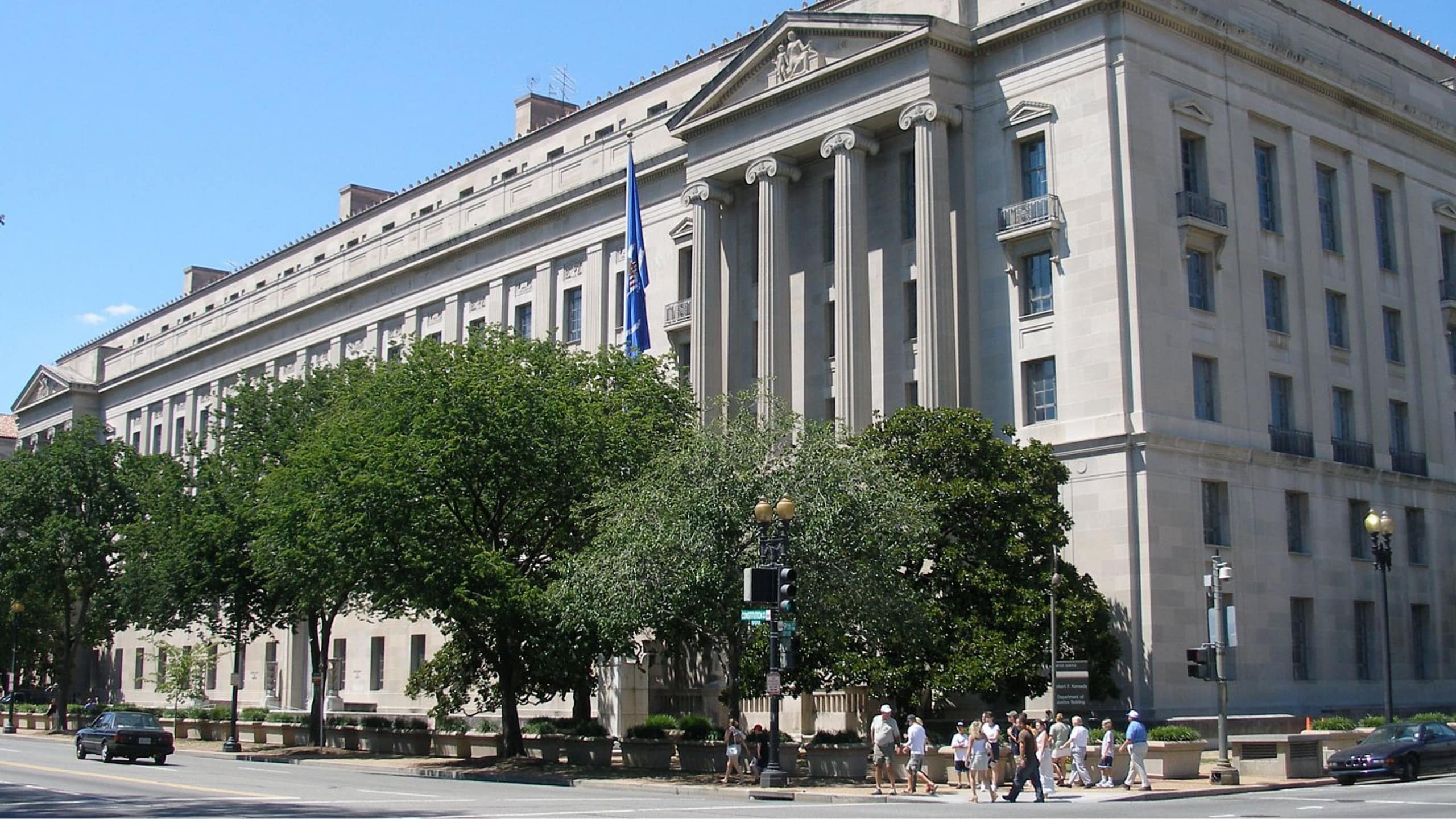
The U.S. Department of Justice announced the release of updated guidance regarding federal protections for religious liberty on Thursday.
This new memorandum reaffirms the administration’s commitment to safeguarding the constitutional rights of religious individuals and organizations.
Acting Attorney General Todd Blanche issued the updated guidance, which marks the first major revision to the department’s religious liberty guidelines since 2017.
The update reflects significant U.S. Supreme Court decisions issued over the last nine years that have expanded the scope of religious protections.
Speaking on the fundamental nature of these protections, Acting Attorney General Todd Blanche emphasized the importance of religious freedom in the United States.
“Religious liberty is one of our Nation’s founding principles and a fundamental right guaranteed by the Constitution,” Blanche said.
He further noted that federal agencies must fully respect the ability of all Americans to live out their faith in daily life.
The new guidance directs all executive departments and agencies to ensure federal programs and employment practices comply with the Constitution.
It specifically cites the Religious Freedom Restoration Act of 1993 and Title VII of the Civil Rights Act as primary legal frameworks.
The Department of Justice noted that religious exercise includes not only belief and worship but also conduct in daily life.
Such conduct must be reasonably accommodated by federal entities whenever it is permitted by law and practicable.
Key updates within the memorandum include the integration of recent Supreme Court precedents that clarify the First Amendment’s scope.
The guidance also strengthens the protection of parental rights, confirming that parents may direct the religious upbringing of their children.
Furthermore, the document reaffirms the principle of church autonomy, barring government interference in internal religious governance and employment.
Federal agencies are now instructed to proactively consider religious liberty impacts when developing new rules or policies.
The Department of Justice is requiring agencies to designate officers to review regulatory proposals for compliance with these protections.
Agencies must also consider religious liberty concerns raised by the public during mandatory notice-and-comment periods.
In terms of federal employment, the guidance reaffirms that agencies must accommodate religious expression and practice in the workplace.
This includes scheduling accommodations and workplace religious expression, according to the Department of Justice.
The guidance also provides safeguards for religious organizations involved in federal contracting and grant programs.
Agencies may not force individuals or groups to relinquish their religious character to participate in federal programs.
Religious organizations must be permitted to compete on equal footing with secular organizations in these programs.
Assistant Attorney General Dan Burrows for the Office of Legal Policy explained the purpose of the new instructions for federal agencies.
“The new religious liberty guidance instructs agencies on how to protect one of our most fundamental constitutional guarantees: religious liberty,” Burrows said.
He added that the guidance helps ensure federal actions do not discriminate based on religion.
The Office of Legal Policy will continue to assist agencies in reviewing proposed actions for compliance with federal religious liberty protections.
The department confirmed that the updated guidance is now available for public review on its official website.
This initiative highlights a broader effort to ensure that interaction with the federal government does not infringe upon faith-based practices.
All executive departments have been tasked with implementing these revisions to align with current judicial standards.
The Department of Justice remains the primary body for overseeing these protections across the federal landscape.