
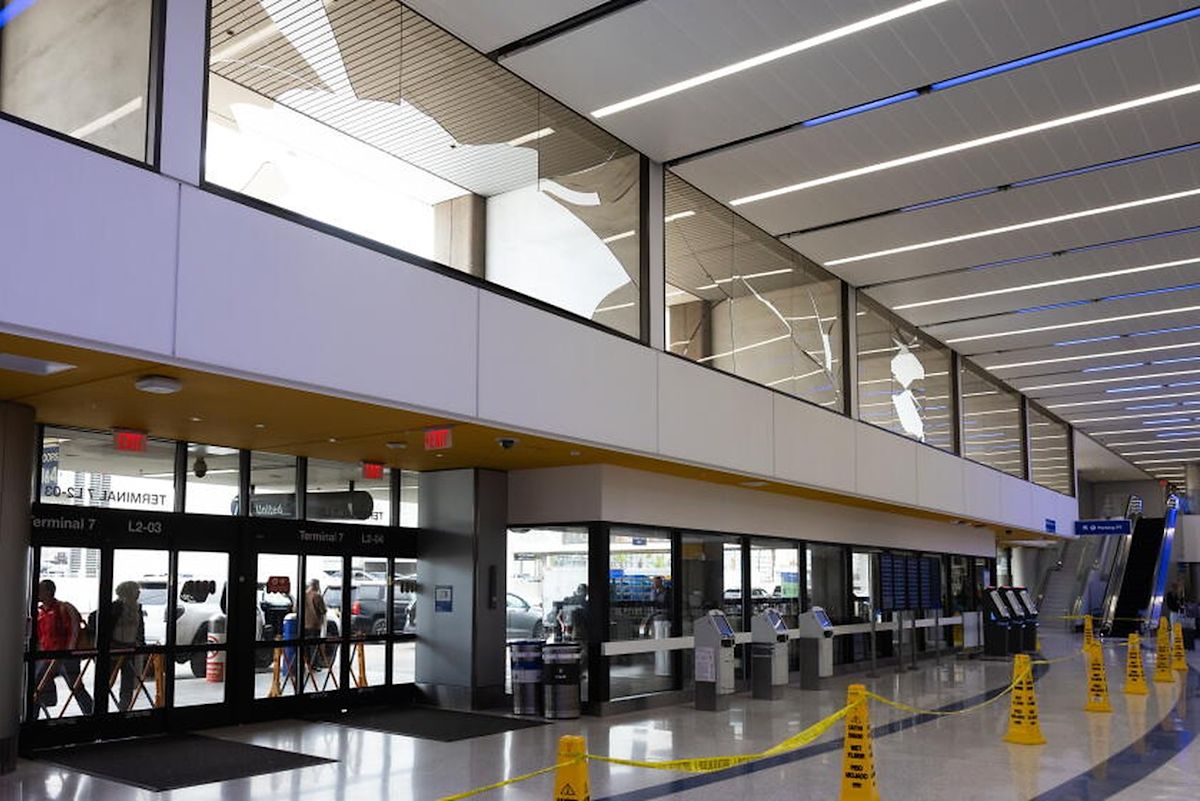
A preliminary magnitude 5 earthquake struck off the coast of Manhattan Beach in Southern California this morning, followed by at least five subsequent aftershocks.
Check Your Amazon Prime Eligibility (Without Leaving This Page)
Select your category below to unlock your specific free trial and discounted membership rate:
Prime for Young Adults
Included with Prime for Young Adults:
- Fast, Free Delivery: Unlimited Same-Day, One-Day, and Two-Day Delivery on millions of items.
- Unlimited Streaming: Prime Video with award-winning Originals, movies, and live sports.
- $0 Food Delivery Fees: Free Grubhub+ membership included (save ~$120/year).
Amazon Prime (Standard)
Included with Amazon Prime:
- Fast, Free Delivery: Unlimited Same-Day, One-Day, and Two-Day shipping options.
- Instant Entertainment: Award-winning TV shows, movies, music, and photo storage.
- Full Access to Alexa+: AI assistant for entertainment, deals, and smart home tracking.
Amazon Prime Access
- Full Prime Benefits: Free shipping, Prime Video, and exclusive shopping deals.
- No Long-Term Commitment: Cancel or pause membership anytime.
The magnitude 5 earthquake that rattled Southern California was far from the Big One.
Still, the temblor was terrifying, and officials were still assessing possible damage.
After a magnitude 4.5 aftershock two hours after the main quake, Manhattan Beach closed its pier as a precaution.
Glass broke, and a ceiling panel fell at Los Angeles International Airport, and objects fell across the region, including at a HomeGoods store in Torrance and shelves at homes from El Segundo to Gardena.
But it was the strongest quake to hit the Los Angeles-Orange County region since 2014.
That year, a magnitude-5.1 earthquake hit the Brea-La Habra area in northern Orange County.
Saturday’s quake occurred beneath Santa Monica Bay, about three miles offshore of the Hermosa Beach and Manhattan Beach piers, and was on the deeper side, about 7.6 miles under the surface.
The Brea quake was centered directly under inhabited areas, and was shallower, 3.2 miles under the surface, and therefore closer to people and buildings.
The 2014 quake produced about 1.4 times the energy as Saturday’s quake, and resulted in strong shaking in areas closest to the epicenter, more intense than the moderate shaking felt closest to the epicenter in Saturday’s quakes.
The 2014 earthquake caused more than $2.5 million in damage in La Habra, Fullerton and Brea.
At least eight homes and 20 apartment units were red-tagged in Fullerton because they are deemed unsafe to occupy.
In La Habra, about 38 people, including seven children, spent the night at a Red Cross shelter.
In that quake, furniture tumbled, pictures fell off walls and glass broke, people suffered minor injuries in a rock slide that overturned their car, and several water mains and chimneys broke.
In Brea, the civic center had to close because of a broken water pipe on the third floor, damaged ceiling tiles and toppled bookshelves.
Like in 2014, Saturday’s quake was followed by aftershocks.
But these modest quakes are a reminder of the much greater seismic dangers Southern California faces.
The last major temblor to strike urban Southern California, the magnitude 6.7 Northridge earthquake of 1994, resulted in severe damage and the deaths of about 60 people.
But it was also mostly limited to a relatively small area of Los Angeles County.
By comparison, a hypothetical magnitude 7.8 earthquake on the southern San Andreas would simultaneously bring violent shaking to L.A., Orange, Riverside, San Bernardino, Ventura and Imperial counties and could result in 1,800 deaths, according to a U.S. Geological Survey estimate published in 2008.
There’s a 60% chance of a magnitude 6.7 or greater earthquake striking the Los Angeles region by 2045, according to USGS estimates published in 2015.