
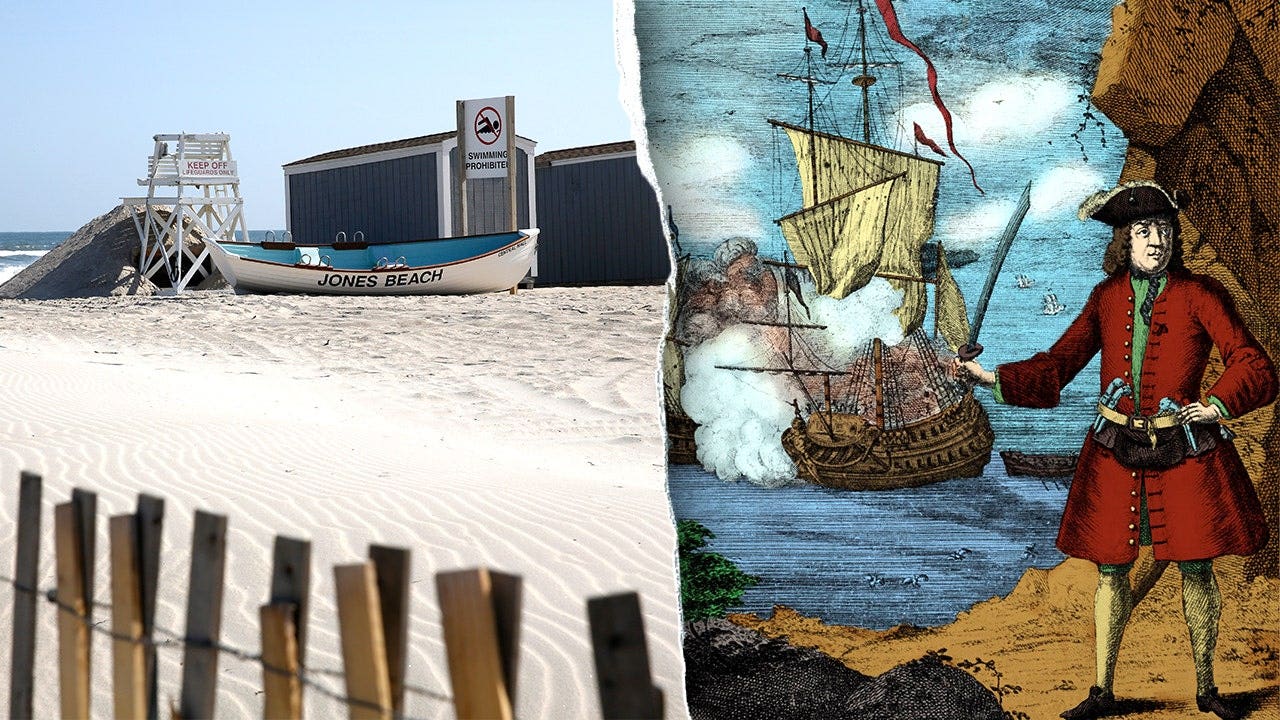
An amateur historian is suggesting a link between a notorious 17th-century pirate and the namesake of New York’s famous Jones Beach.
James Bailey, who discovered ancient coins linked to pirate Capt. Henry Every in 2014, claims colonial records suggest Every and his crew received assistance from Thomas Jones, as “reported The Associated Press.”
Bailey unearthed an Arabian coin linked to Every at a Rhode Island orchard over a decade ago.
He later researched Every, who is best known for leading the 1695 raid on the Indian treasure ship Ganj-i-Sawai.
Bailey stated that documents suggest Jones was recruited to serve as a wheelman to help the pirate crew avoid authorities.
Reflecting on the historical significance of the namesake, Bailey told the AP, “You have millions of visitors and generations of New Yorkers going to this beach.”
He added, “Nobody knew he was actually a major player in arguably the biggest heist in the history of piracy.”
Records indicate that New York’s governor investigated Jones during his lifetime while he operated a whaling business.
A descendant of Jones once dismissed these piracy rumors as slander and improbable fictions in 1906.
Meagan Schulman, a doctoral candidate at Fordham University, noted that privateers like Jones were often authorized to raid ships.
She explained the nuance of the era, stating, “The reality was that privateers were pirates, just sponsored by a certain government or patron.”
While Bailey’s claims remain unverified, Richard Blakemore, a maritime history professor at the University of Reading, called the research persuasive.
Blakemore noted that the findings highlight the deep economic connections between early British colonies and piracy.