
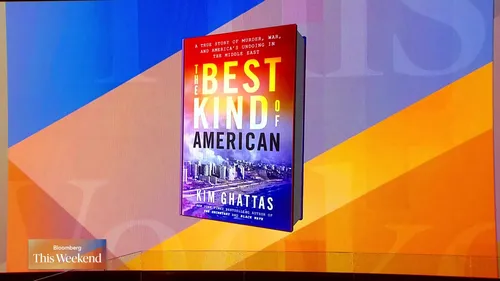
Journalist and author Kim Ghattas recently appeared on Bloomberg This Weekend to discuss the enduring geopolitical consequences of the 1982 war in Lebanon.
During a discussion with hosts David Gura and Christina Ruffini, Ghattas explained that the violence that engulfed the nation decades ago established a trajectory for the United States, Israel, and Iran.
The author noted that this historical period continues to shape current conflicts throughout the broader Middle East region today, according to Bloomberg.
Ghattas spoke about the themes presented in her new book, titled The Best Kind of American.
Within the conversation, the author examined the long-standing influence maintained by Hezbollah.
She also addressed the ongoing difficulties Lebanon faces while attempting to assert its own state authority amid persistent instability.
Ghattas further warned of the significant risks associated with attempts by external powers to remake the region through military intervention.
The analysis provided by Ghattas highlights how historical events remain deeply embedded in the current political landscape of the Middle East.
By tracing the origins of these tensions back to the 1982 conflict, the author provided context regarding why the regional power dynamics remain so volatile.
The hosts engaged with Ghattas to better understand the complexities of statehood and foreign influence as described in her latest publication.
The interview underscored the importance of historical perspective when evaluating the motives and actions of major international players involved in regional disputes.
According to the information provided by the network, the discussion serves as a reminder that past wars often leave a legacy that complicates future diplomatic efforts.
Ghattas continues to analyze how these specific historical markers define the policy decisions made by governments involved in the region.
The insights shared by the author offer a critical look at the intersection of history and modern warfare.
Her work emphasizes that understanding the 1982 conflict is essential for those studying the current state of affairs in Lebanon and its neighbors.