
A growing demographic of younger investors is increasingly turning toward high-risk market instruments as they attempt to bridge a perceived wealth gap.
These market participants are frequently drawn to buzzy stocks and leveraged exchange-traded funds in an effort to accelerate their financial progress.
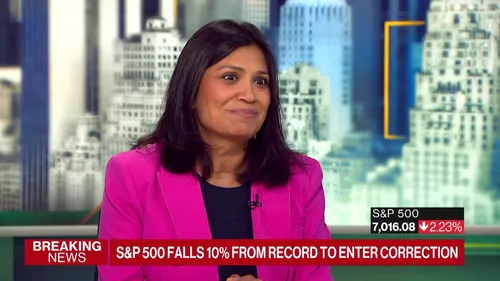
Gargi Chaudhuri, a strategist at BlackRock, recently addressed the trend while appearing on the Bloomberg Money program.
Chaudhuri outlined a balanced approach for individuals looking to navigate these complex financial waters while maintaining long-term stability.
She suggests that investors can successfully dabble in higher-risk products while simultaneously leaning into time-proven investment strategies, according to Bloomberg.
The discussion featured hosts Tom Keene and Scarlet Fu, who examined the psychological drivers behind the current interest in speculative assets.
During the broadcast, Fu highlighted the ongoing industry analysis regarding these specific financial offerings.
She provided a public acknowledgment of the work performed by Eric Balchunas, who has been documenting the rise of what are colloquially referred to as hot sauce investment products, reported Bloomberg.
The term suggests a market appetite for aggressive, high-volatility investments that promise significant returns despite the inherent risks involved.
Financial experts continue to monitor how this generation balances the fear of missing out on market gains with the necessity of prudent risk management.
By combining speculative trading with foundational investment principles, advisors hope to provide a sustainable path forward for those feeling left behind by traditional market growth cycles.
The conversation underscores a broader shift in retail investing, where digital accessibility meets a heightened sense of urgency among younger market participants.
As these investors continue to explore volatile products, the focus remains on education and the integration of diverse asset classes to protect portfolios from extreme market downturns.
The ongoing coverage by analysts remains essential for those attempting to understand the complex dynamics of modern retail trading behaviors.