
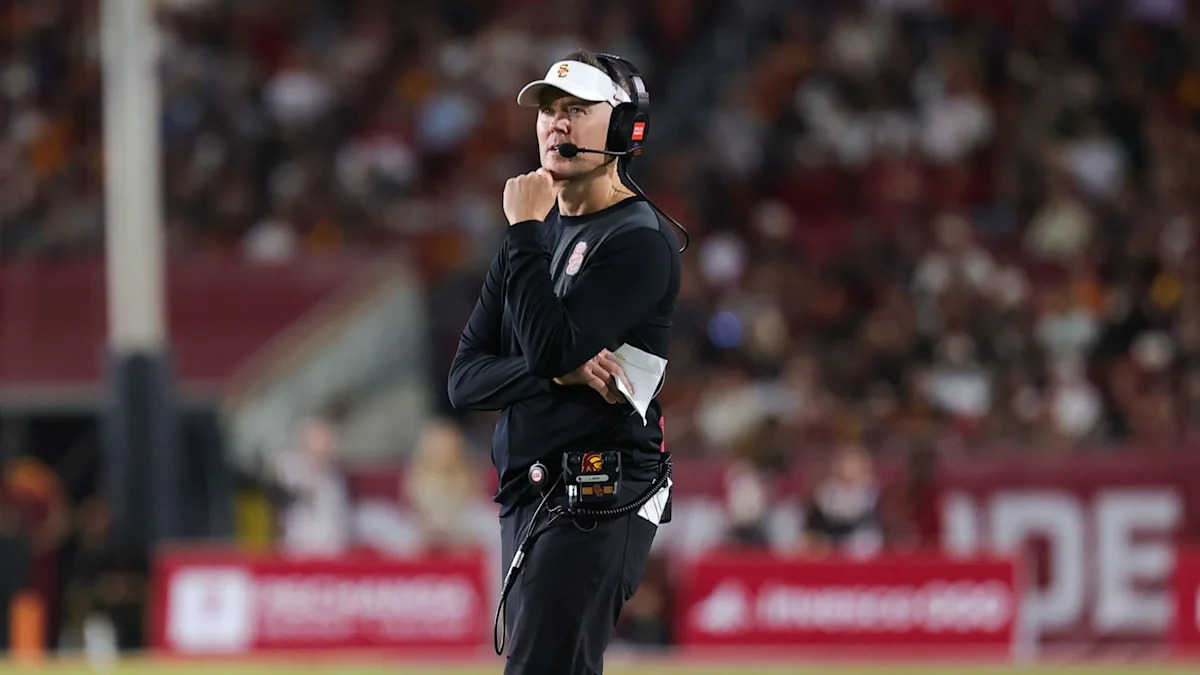
USC football coach Lincoln Riley is facing renewed scrutiny following a 27-13 loss to Indiana that effectively ended the team’s playoff hopes.
The defeat marked another disappointing performance in a season that has failed to meet expectations for the Trojans.
Following the game, Riley addressed the media in Bloomington regarding his team’s performance, “We’re right there, close tonight — this game came down to a couple of plays.”
This sentiment has become a recurring theme for the coach during his five-year tenure at the university.
Critics point out that Riley now holds a 6-15 record against ranked teams while coaching the Trojans, including a 1-8 mark in road games, according to Yahoo Sports.
Since reaching an 11-1 record in his first season, Riley has compiled a 31-20 record that has left many observers questioning the program’s direction.
The recent loss to Indiana featured three interceptions and a failure to convert multiple red-zone opportunities into touchdowns.
These consistent late-game struggles have drawn unfavorable comparisons to previous coaching tenures at the school.
While some supporters previously pointed to a win over Ohio State as a potential turning point, that victory has since been dismissed by analysts as less significant due to the opponent’s own struggles this season.
Meanwhile, neighboring UCLA has seen a resurgence under coach Bob Chesney, who has led his team to a 10-0 record in his first year.
The disparity between the two programs has further intensified the conversation surrounding Riley’s future.
Although terminating the coach’s contract would require a significant financial payout, some argue that the current trajectory is unsustainable for a program of this stature.
As the season progresses, the pressure on the coaching staff continues to mount with each passing loss.
The upcoming matchup against UCLA at the Rose Bowl is expected to serve as a critical test for the team’s remaining credibility.
Ultimately, the consistent inability to close out competitive games has led to growing calls for the university to evaluate its leadership moving forward.